
Departments
EOS (3D Skeletal Imaging)
A device that uses X-rays to image the whole body or a region from the front and the side at the same time.
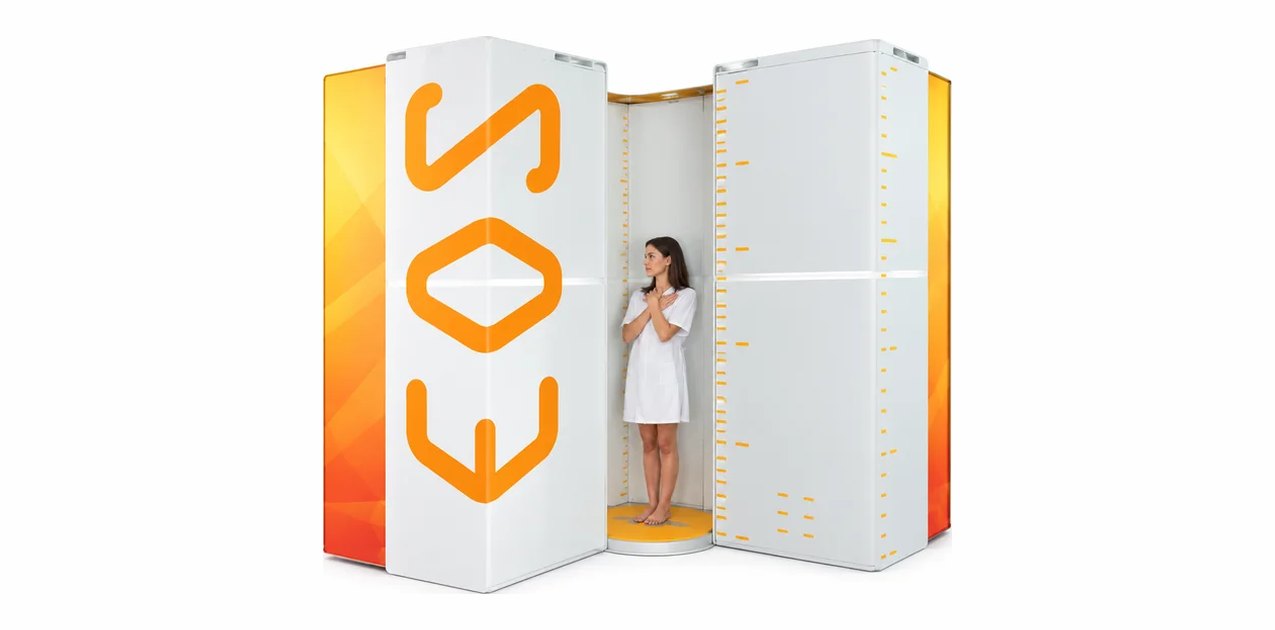
Low radiation dose, high image quality
Its key advantage is that it performs these examinations with 90% less radiation than conventional devices. In studies, image quality was better than or equal to conventional examinations in 97.2% of cases.
The work of Georges Charpak, winner of the 1992 Nobel Prize in Physics, made it possible to eliminate scattered radiation and to amplify the signal with detectors. As a result, examinations can be performed with a low radiation dose.
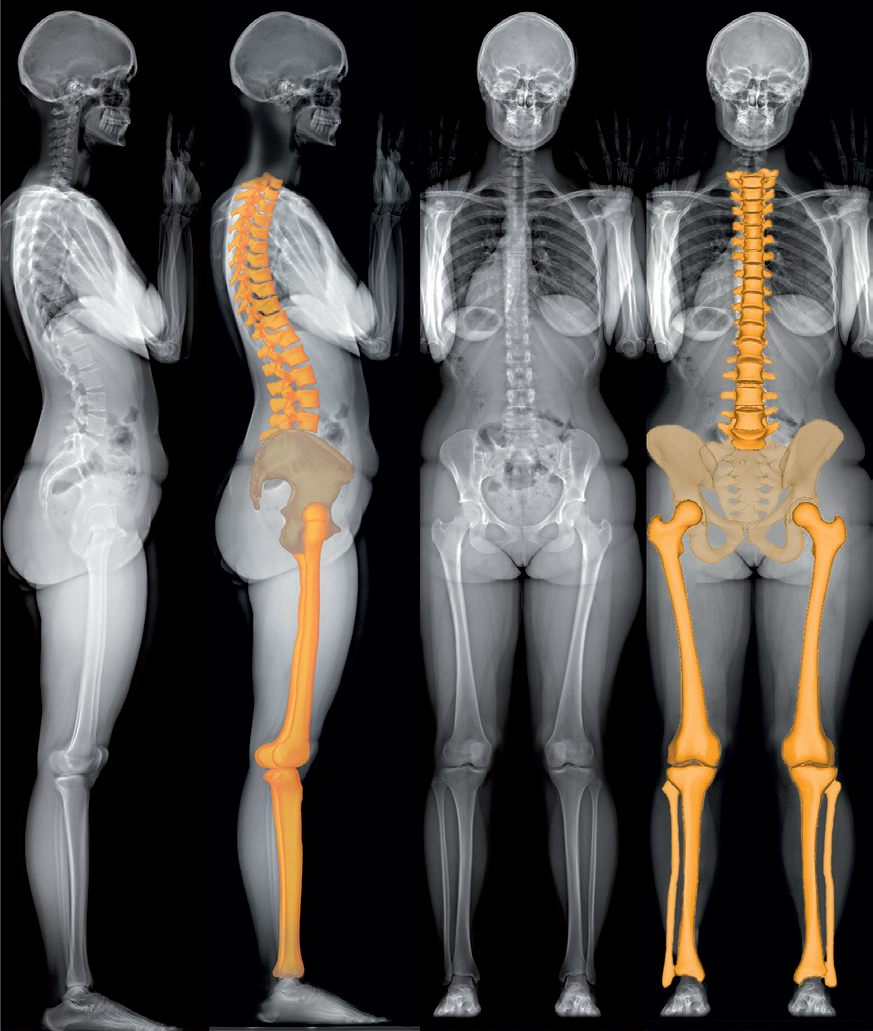
EOS (Scoliosis)
Scoliosis is a curvature of the spine that can occur in the upper and lower back. Instead of lining up in a straight line, the vertebrae shift to the right or left and also rotate around their own axis. It most often appears during adolescence.
Scoliosis is diagnosed with a physical examination and a standing X-ray of the whole spine. It is followed up by measuring the angle on the images, and treatment is guided by this angle.
Follow-up in children requires a high cumulative radiation dose. With EOS, this dose is reduced to one tenth. Similar follow-up is also needed in kyphosis.

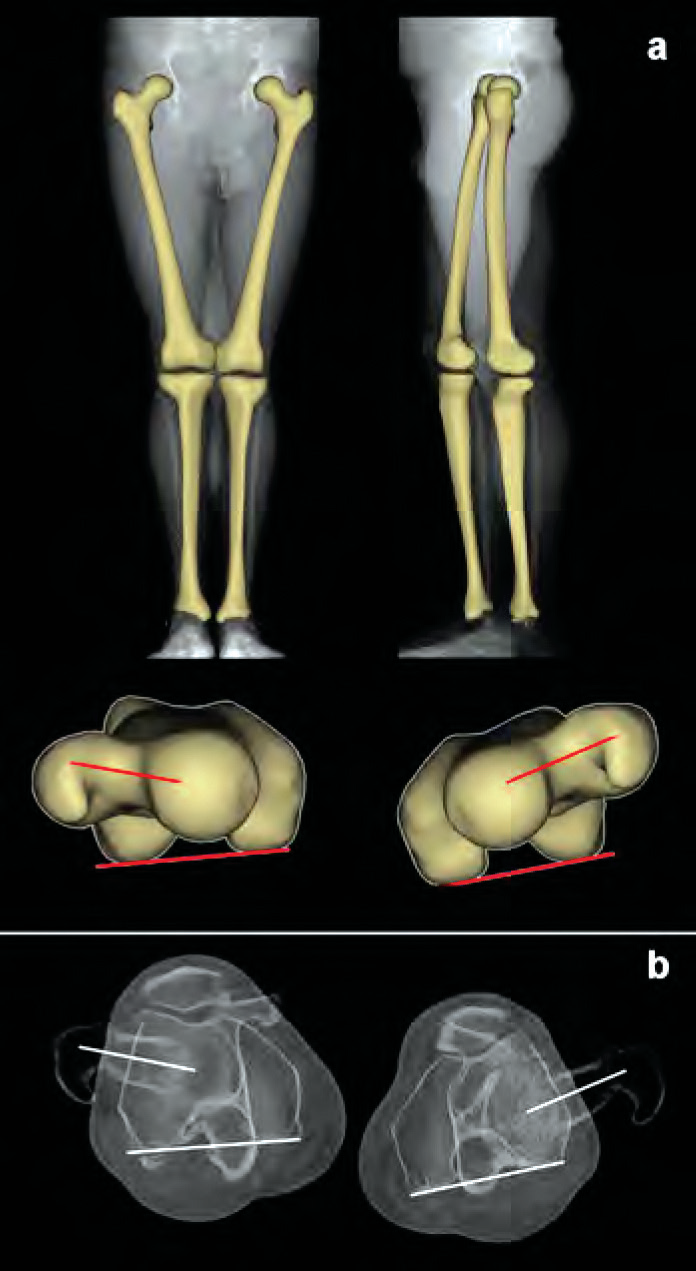
EOS (Angular Deformities of the Lower Limbs)
It is used for planning and measurement before lower-limb surgery. It shows possible deformities of the legs better than conventional X-ray. With 3D modelling, it helps to plan knee and hip arthroplasty operations.
FREQUENTLY ASKED QUESTIONS
Is any preparation needed for an EOS examination?
Is any preparation needed for an EOS examination?
No preparation is needed.
How long does an EOS examination take?
How long does an EOS examination take?
The examination takes 10–20 seconds.
Your Health Is Our Commitment
Your results are now closer.
You can access the laboratory, radiology and other examination results performed at Özel Emar Tıp Merkezi online, quickly and securely.